Naakaa Case Study showcases how Megsys Digital helped transform traditional labour and contractor interactions into a more accessible digital experience. The Naakaa platform connects workers, contractors, and businesses through a structured digital solution designed to simplify workforce engagement, improve accessibility, and support more efficient labour management. By combining thoughtful UX, mobile technology, and scalable digital architecture, Megsys Digital helped turn a traditional process into a modern workforce platform.
That's the daily reality at a naka: dozens of workers turn up at sunrise, and on a slow day only a handful get chosen. Contractors have the opposite problem — they drive from chowk to chowk, unsure who's reliable, unsure who's even available. Naaka needed to fix both sides of that same street corner at once.
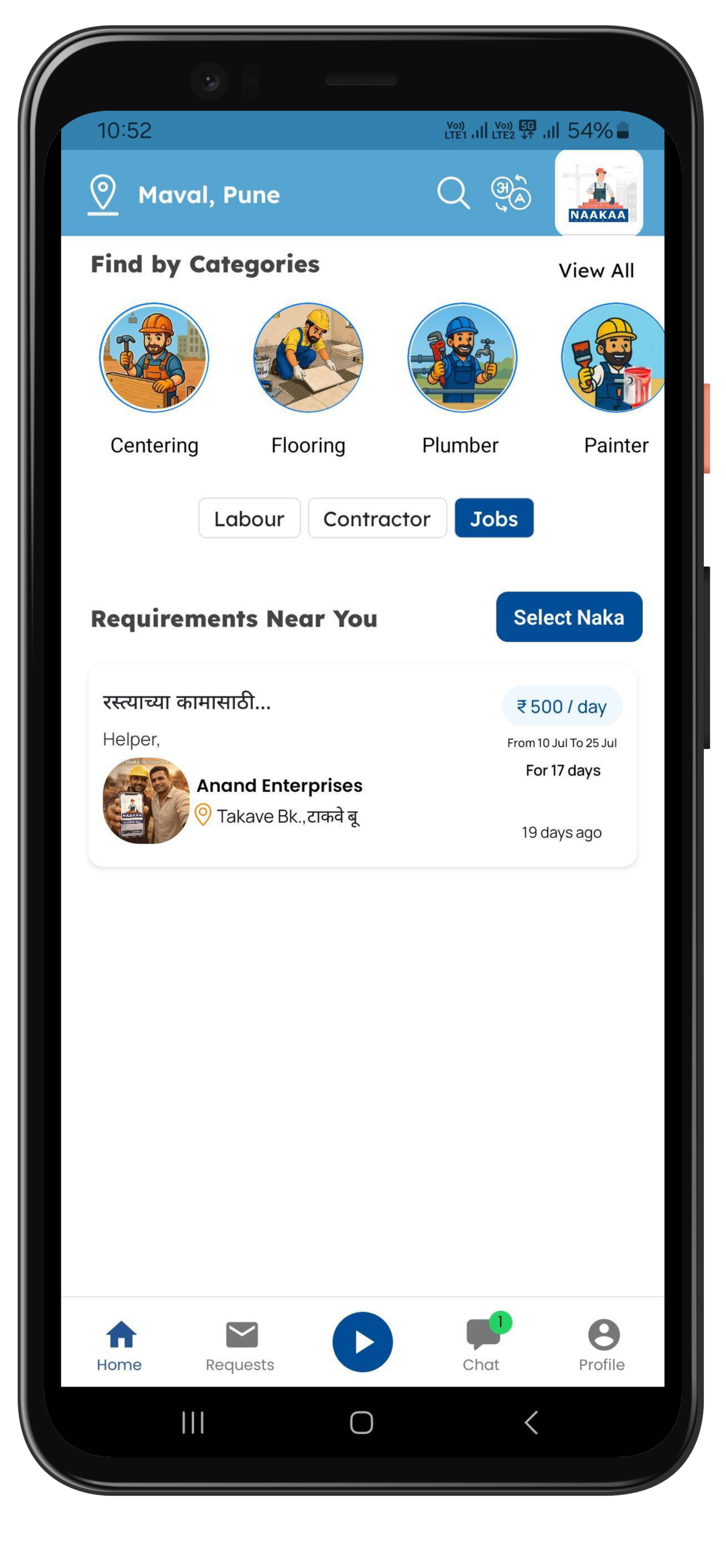
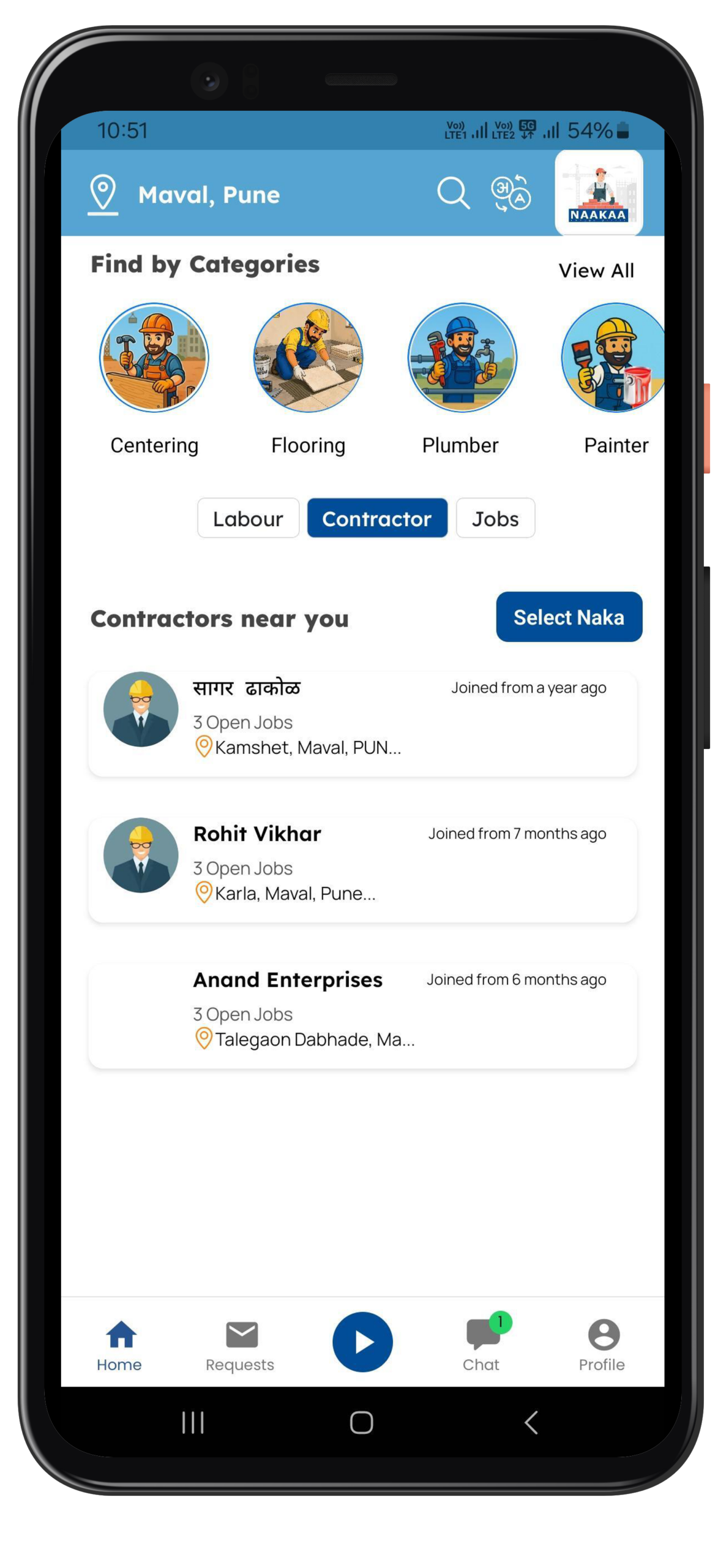
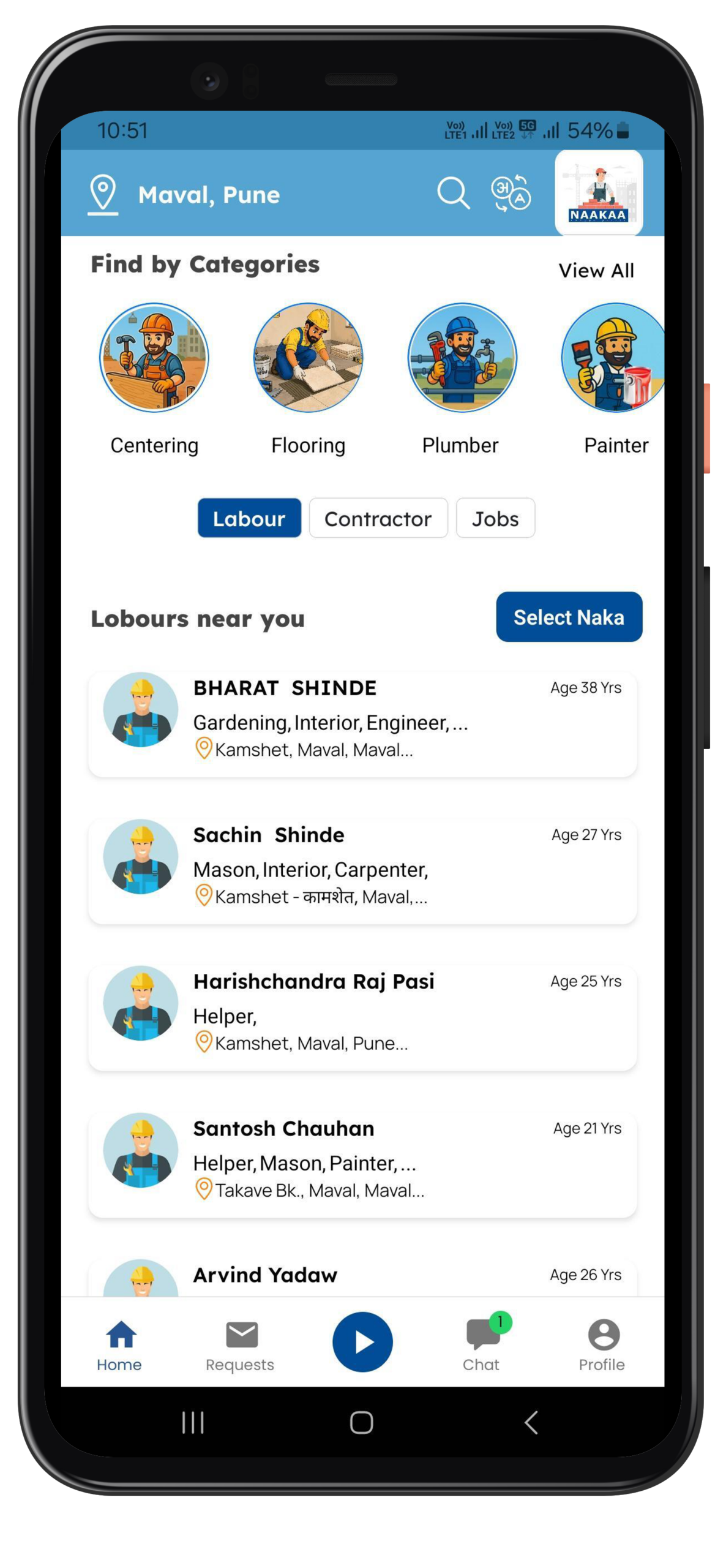
Designing for two very different users — a daily-wage worker on a basic Android phone, and a contractor juggling five sites at once — meant every decision had to earn its place on the screen.
We spent time at actual naka chowks, watching how hiring really happens — the questions contractors ask, the way workers group by trade. That fieldwork shaped two separate app experiences sharing one back end, instead of a single interface trying to serve both.
 Phase 01
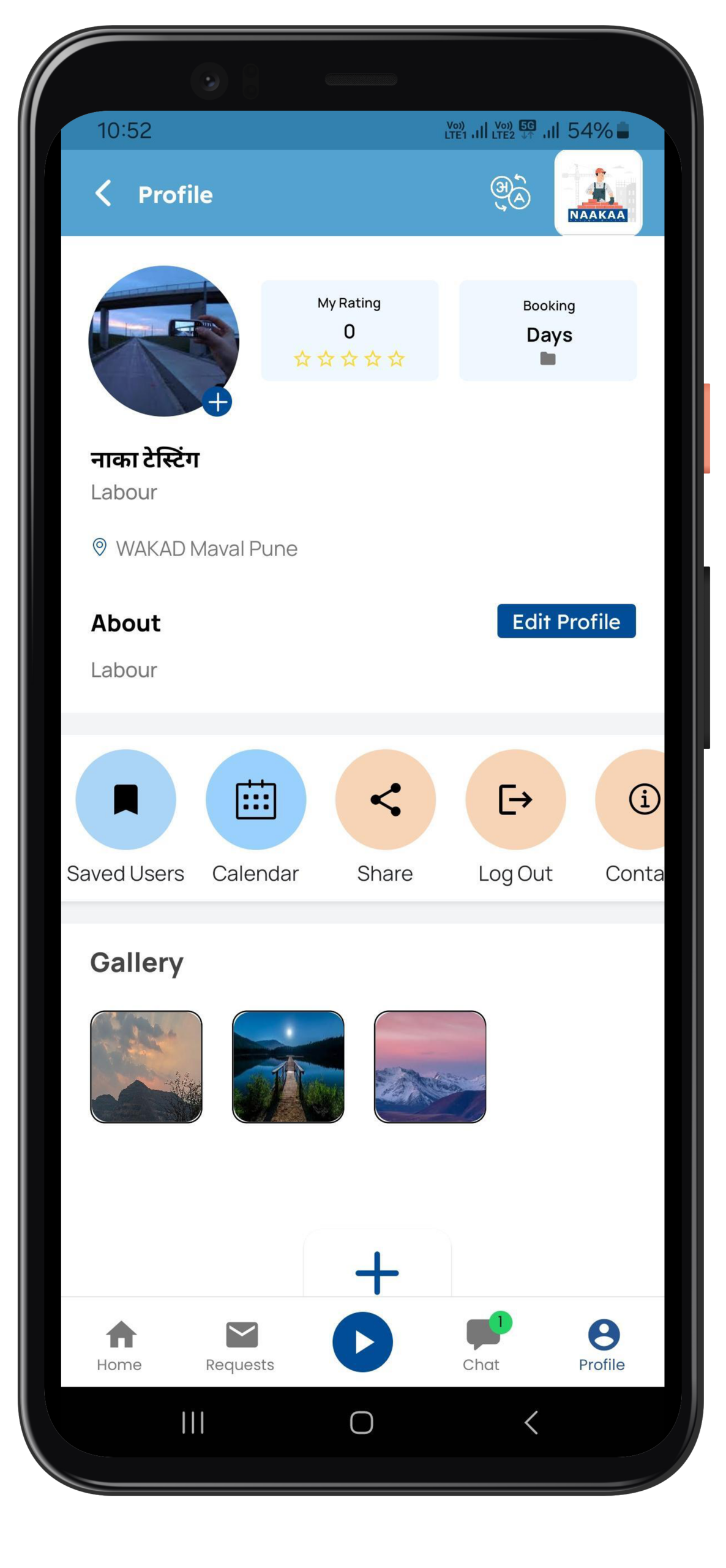
Most workers use entry-level Android phones on patchy data, so we built lean: icon-first navigation, minimal text, and a lightweight core so the app opens fast on a two-year-old device. The contractor side got a fuller dashboard for managing crews across multiple sites.
 Phase 02
The gap Naaka had to close wasn't just distance, it was trust. Every worker profile carries ID verification, skill tags, and a rating built from past jobs, so a contractor can hire a stranger with the same confidence as hiring someone they've used for years.
 Phase 03
An app for daily-wage workers doesn't launch from a press release — it launches at the naka itself. Our team ran on-site onboarding drives, walking workers through sign-up in person and training contractors on the dashboard, before opening the app city-wide.
 Phase 04
Within weeks of launch, the same naka looked different — workers matched to jobs before they'd have finished their morning tea, and contractors filling crews without leaving their site.
Megsys Digital understood something most tech teams miss — this isn't a hiring app for offices, it's a hiring app for the street corner. They built for the worker with a basic phone just as carefully as they built for the contractor managing five sites.